Welcome to isoladiburano.it the Official Website of Burano in Italy, the colorful island of lace.
Home of big artists like Baldassare Galuppi, Remigio Barbaro and Pino Donaggio, as well as inspirer of the Arte Buranella.
Many international magazines include Burano among the top 10 most colorful cities in the world, although it would be more appropriate to bring it within the first 10 most colorful places in the world or between the 10 most colorful locations in the world.
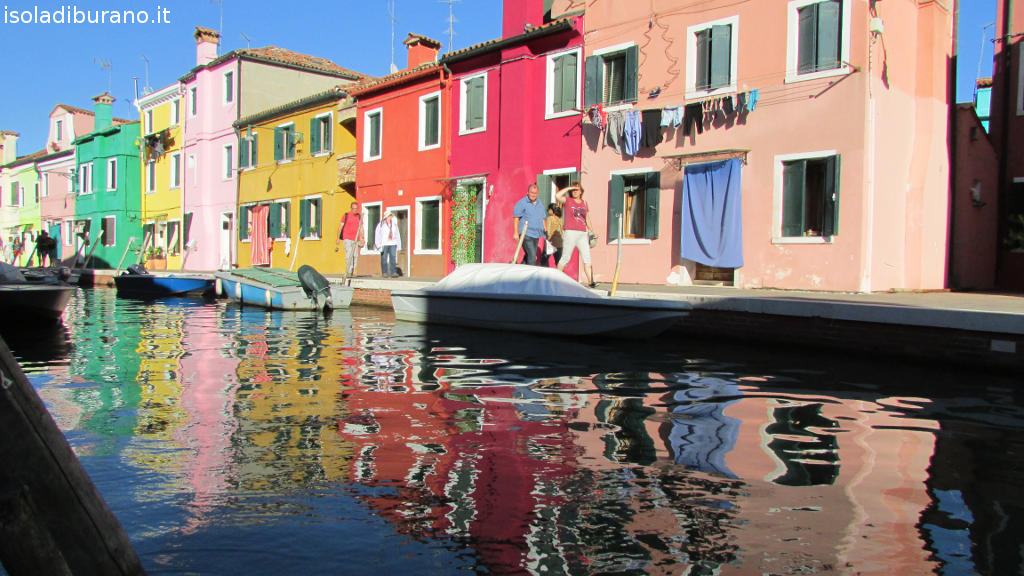
Tour of Burano. From left: Burano's colors reflected on the green water of the canals, coloured houses of Burano, a half red and half green house in Burano.
All visitors of Burano remain intrigued by the many colours and the colorful houses that are reflected into the green waters of channels, by the leaning bell tower, by the tranquility and the calmness with which the elderly ladies embroider original Burano lace by their tombolo (or lace pillow), while they are laughing and chatting in squares among them. It seems to be in paradise.
Children who dart freely with their bicycles, balconies with multicolored flowers, fishermen who put up fresh fish from their traditional boats.
From left: the leaning tower of Burano, the square of Burano and the leaning tower behind the church.
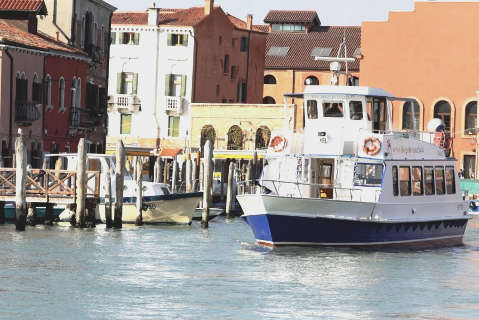
Just gone ashore from the ACTV ferry (purchase your Burano water bus tickets here), you will find yourself on a green lawn where a solemn sculpture by Remigio Barbaro is placed.
Following the shores you will reach the centre of the island: Galuppi Square, where friendly ladies invite the most curious visitors into their shops to admire the lace working.
Although lacemaking in Burano is the main craftsmanship attraction, equally enchanting is the "lume glass working": a technique born on the nearby island of Murano, but widespread throughout the other islands of the Venetian Lagoon.
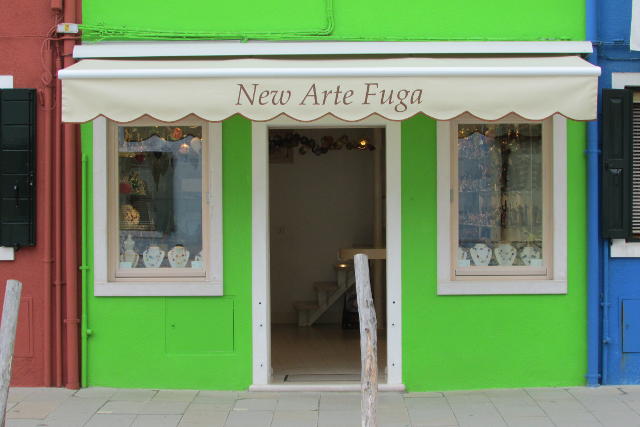
Burano is no exception, and it is quite easy to come across small shops where you can admire this type of Murano glass processing — real miniature glass factories, such as the one at Fondamenta Giudecca 132, inside a typical small green house.
If you are looking for a place to eat like a local, Burano is very famous for its fish dishes, the most celebrated of which is the "risotto de gò": the broth in which the rice is cooked and creamed is made from the "gò", a fish typical of the Venice lagoon, known in English as the "goby".
The dishes of Burano's cuisine are served in restaurants that, while well regarded for the quality of their service, keep the genuine spirit of a traditional "trattoria buranella" (a Burano tavern), where you can still enjoy delicious fresh fish.
If your time is short, there are several pizzerias, or you can opt for a delicious ice cream at a bar, or pick up a typical Burano cookie (the most famous are the "Bussolà" and the "Esse") at a pastry shop, and enjoy it at the end of Piazza Galuppi, where San Martino Bishop's Church is located. Inside, alongside many important works, hangs a famous painting by Giambattista Tiepolo.
To the side stands the Chapel of Santa Barbara.
In the same square you will find the "Museo del Merletto" (Lace Museum), the Town Hall, a well made of Istrian stone, and the sculpture of Baldassare Galuppi by Remigio Barbaro, the renowned sculptor from Burano.
Beside the church, some stalls offer local souvenirs at reasonable prices.
Every Wednesday morning, not far from the church, a street market takes place, and two minutes from the centre you can visit the fish market, where the typical seafood of the Venetian lagoon is on display.
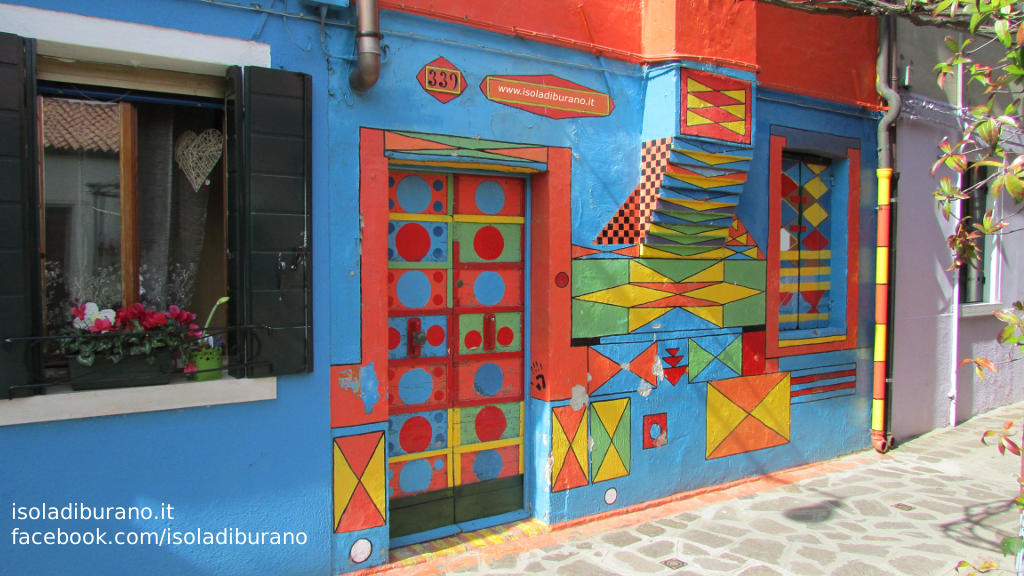
Among Burano's narrow streets there are many "capitelli" (small shrines) placed at the entrances of the alleyways, and while searching for them you will almost certainly stumble upon the most famous coloured house on the island: "la Casa di Bepi Suà", painted in many colours divided into geometric shapes.
From left: the famous and colorful Bepi's house in Burano, Baldassare Galuppi Square, the Burano lace museum.
The typical houses of Burano are mainly square in shape and divided into two or three floors.
On the ground floor there is the kitchen, the dining area and the bathroom. The upper floors contain the bedrooms.
The different colours of the houses, which today represent our island's most distinctive feature, originally served to mark property boundaries.
Yet an ancient legend narrates that fishermen painted their houses so they could spot them from a distance when returning from the sea.
Burano is an island in the Northern Venetian Lagoon, 11 km north-east of Murano and Venice, connected by a route along the Canale Bisatto, Canale Carbonera and Scomenzera San Giacomo: the journey from Venice to Burano takes around 45 minutes by boat.
The island is also easily reachable from Treporti (10 minutes) and Punta Sabbioni (30 minutes), two resorts in the Cavallino-Treporti area overlooking the lagoon.
Today Burano has around 3,000 inhabitants, while the total population of Venice and its islands is approximately 60,000.
If you are planning to visit Burano, you will find all the information and tips you need on the page "getting to Burano".
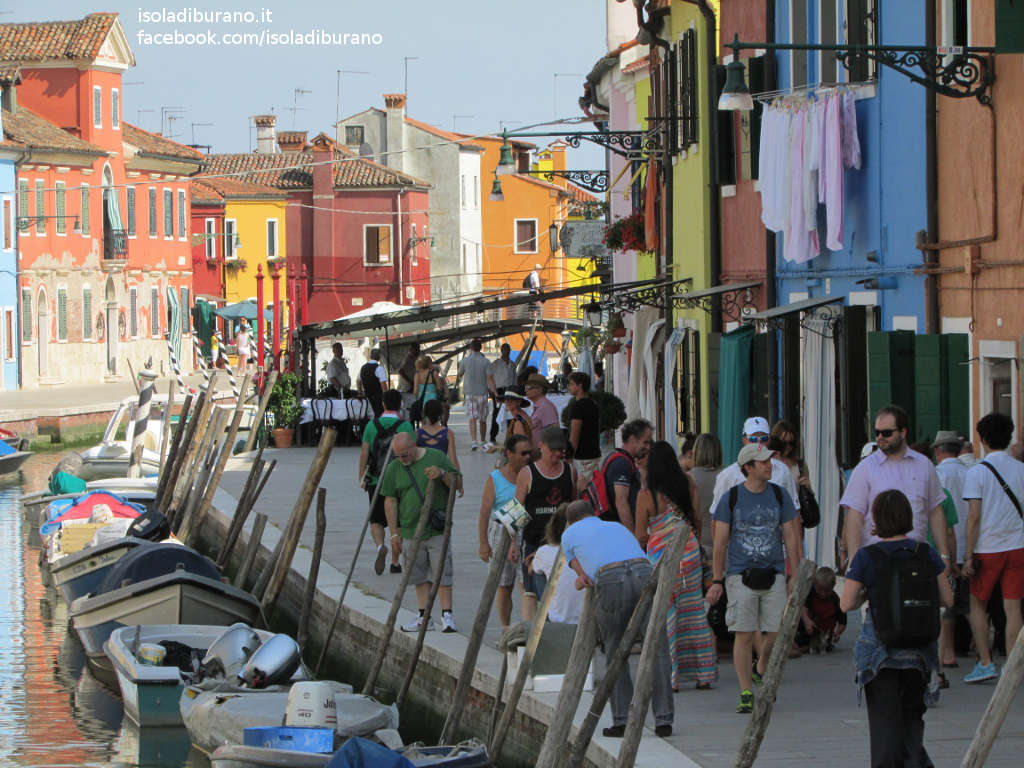
From left: people visiting Burano, sunset in Burano, typical landscape of Burano in Italy.
What to See and Do in Burano
Burano packs a surprising amount into its small size. Wander the colourful streets to find Bepi's House, visit the Lace Museum in Piazza Galuppi, admire the leaning bell tower of San Martino Church, and browse the Wednesday street market near the waterfront. For a full itinerary with map, do not miss our guide: "Things to do in Burano."
History of Burano
The inhabitants of Altino, fleeing from barbarian invasions, took refuge on the lagoon islands, giving them the names of the six gates of their abandoned city: Murano, Mazzorbo, Burano, Torcello, Ammiana and Costanziaca.
The name "Burano" comes from "Porta Boreana", the northern gate of the city.
On these islands the first houses were built on stilts, with walls made of woven canes later plastered with mud. They were very light structures consisting of a single room, because the ground was too soft. Beds were made from dried leaves.
Later these rudimentary houses were replaced by brick buildings, and the older ones were repurposed as warehouses.
Some scholars believe that Burano was not originally located where it stands today. Certain ancient texts record that the island was situated closer to the sea, and that its inhabitants had to flee due to a powerful tidal wave.
Other texts, however, state that Burano's position has never changed, and that this helped the island avoid malaria.
Since the time of the Venetian Republic, Burano had only 8,000 inhabitants (now around 3,000), predominantly fishermen and farmers. Thanks to the lace-making trade, the island grew economically, exporting its remarkable lace all over the world.
Today Burano is divided into five districts connected by bridges: "San Martino Destro", "San Martino Sinistro", "San Mauro", "Giucecca" and "Terranova", crossed by the canals known as "Rio Ponticello", "Rio Zuecca" and "Rio Terranova".
The most recent major change was the filling-in of the main canal to create the square, which takes its name from the famous composer Baldassare Galuppi.
What are the major activities in Burano?
In the past, fishing was the main livelihood in Burano, while today it is tourism alongside retail trade and restaurants.
That is why this site serves as a tourist guide to Venice and its islands, helping you find answers to common questions about Venice, Italy, such as "where in Italy is Venice".
Burano is world-famous for its needle lace, one of the finest lacemaking traditions in Europe. The island also has a tradition of producing Venetian masks, and many local artisans work in the nearby island of Murano, creating precious glass objects. Our detailed shopping section will help you plan your purchases.
How can I find accommodation in Burano, Venice and its islands?
We offer a section on accommodation in the Venice islands and surrounding area to help you choose the most suitable option for your holiday.
A wide range of bed and breakfasts, apartments and hotels in Venice are available, including accommodation in Burano and in nearby places such as Mazzorbo, Torcello, Murano, Mestre, Cavallino Treporti, Jesolo and Abano Terme.
You can also book apartments in Burano or stay in a typical Burano house, once inhabited by fishermen and lace makers, through the page holiday homes and apartments in Burano.
Enjoy a little taste of the timeless atmosphere that you breathe in these places through a convenient and economic boat trip to the islands of the Venice Lagoon.
Departing from Venice, can be complicated for a tourist reaching Murano, Burano and Torcello by public transport, so we thought about comfortable tours of the islands which depart from the Santa Lucia train station in Venice, from Piazza San Marco and, in summer, also from Punta Sabbioni, the end of the Cavallino-Treporti coastline.
In our catalog there are various boat tours options: starting from the classic excursion to Burano, Murano and Torcello, up to the excursion to Murano and Burano with a fish-based lunch in a typical restaurant in Burano.
A novelty are also the tour of Burano, Murano and Venice starting from Punta Sabbioni and the daily excursion to Venice and its islands starting from Jesolo Lido.
In short, if you want to visit Murano and Burano, as well as Torcello and Venice, without sacrificing comfort, seating, explanation on board .... book online the boat trip that's right for you.
Choose the visit to the islands that you prefer, by pressing the button below to have access to our online catalog.
If you are a "DIY tourist", who prefer to move freely without the comfort of our tours, you can get to Burano with the public vaporetto (Line 12). You can skip the line at the ticket offices buying the water bus tickets online.
Plan your weekend in Venice: take a ride in our section dedicated to museums, events, tours, attractions and hotels in Venice and lagoon islands.
Compose online your holiday package in Venice, adding to cart individual services and booking them all at once!


 English
 Italiano